Introduction
Thinking about growing beets inside your home? Using beet grow lights can make it possible to enjoy crisp, sweet beets year-round—even without a backyard garden. Proper lighting is crucial because beets need the right spectrum and intensity to develop those lush leaves and juicy, vibrant roots. Inadequate light often leads to leggy stems and tiny, underdeveloped bulbs.
This post will guide you through the essentials of a successful indoor beet grow light setup. You’ll learn how to choose the best beet grow lights, the ideal lighting duration, and how to position your setup for uniform growth. Whether you’re working with a spare room, a basement, or a sunny windowsill supplemented with LEDs, this guide will help you cultivate healthy, delicious beets right at home.
Say goodbye to bland supermarket produce, and get ready for fresh beets at your fingertips—no matter the season!
Understanding Beet Light Needs

Beets thrive best when they receive at least six hours of direct sunlight each day, though eight to ten hours is ideal for robust growth. Outdoors, beets naturally get the right intensity of sunlight, which promotes healthy greens and plump, sweet roots. If your garden space is shady or you’re growing beets indoors, it’s important to simulate these bright conditions.
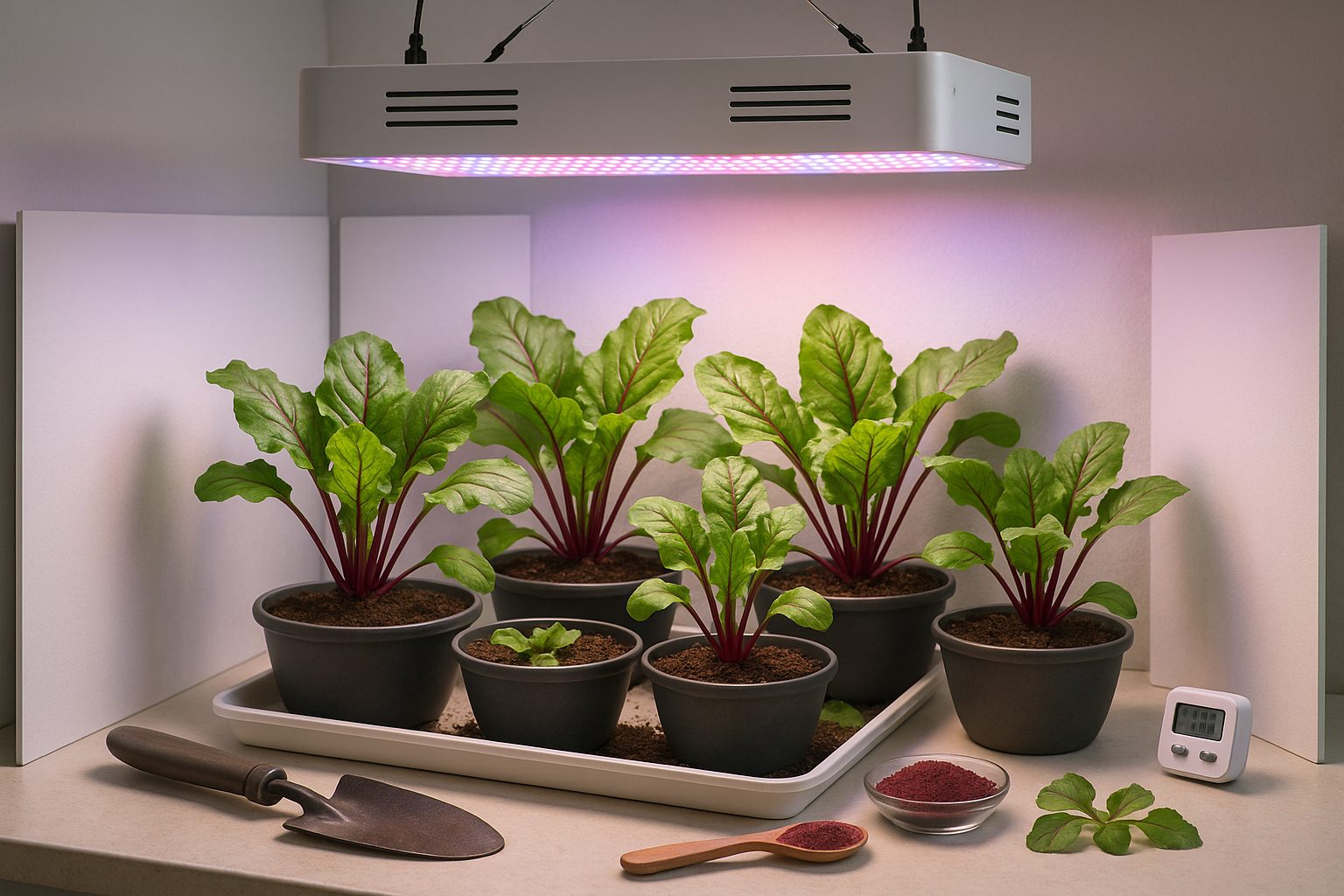
Indoor growers should place beets near a sunny, south-facing window or use LED grow lights, keeping the bulbs 6-12 inches above the plants for optimal intensity. Without enough light, beets may produce spindly leaves and undersized, pale roots. This happens because light is essential for photosynthesis, which fuels energy for both lush foliage and the development of those classic round roots.
Inconsistent or weak light can result in beets with plenty of leaves but very little root growth—or worse, thin, weak plants overall. Whether indoors or outdoors, monitor your beets throughout the season. If stems are stretching or roots aren’t bulking up, increase their daily light hours. For indoor setups, timers can help maintain consistent light, and rotating containers ensures even exposure.
With the right amount and strength of light, you’ll enjoy healthy beet tops for salads and hearty, flavorful roots for roasting or pickling.
Choosing the Right Grow Light for Beets
When growing beets indoors, selecting the right grow light can significantly impact root size and leaf health. Two of the most popular options are LED and fluorescent lights.
LEDs are energy-efficient, produce less heat, and offer full-spectrum options tailored for vegetables like beets, though they can be more expensive upfront. Fluorescent lights, such as T5 high-output bulbs, provide good coverage and are easier on your budget, but they’re generally less durable and not as powerful as LEDs.
When choosing a grow light, focus on wattage—beets need moderate to high intensity, so aim for about 20-40 watts per square foot. Look for lights with a full or balanced spectrum, as red and blue wavelengths are key for beet growth, supporting both lush leaves and firm roots.
Adjustability is important too, since you’ll want to raise the lights as the beets grow to prevent leaf burn. Some systems offer adjustable hanging kits or stand mounts for easy height changes.
For best results, place lights 6-12 inches above the plants and adjust as needed to maintain even coverage with minimal shadows. Use reflective surfaces like Mylar or white boards around your setup to bounce light back onto the plants, helping to prevent leggy, uneven growth.
Also, remember to rotate trays or pots every few days so all your beets receive equal light, encouraging uniform bulbing instead of stretched, spindly tops.
Setting Up Your Indoor Beet Garden for Optimal Lighting
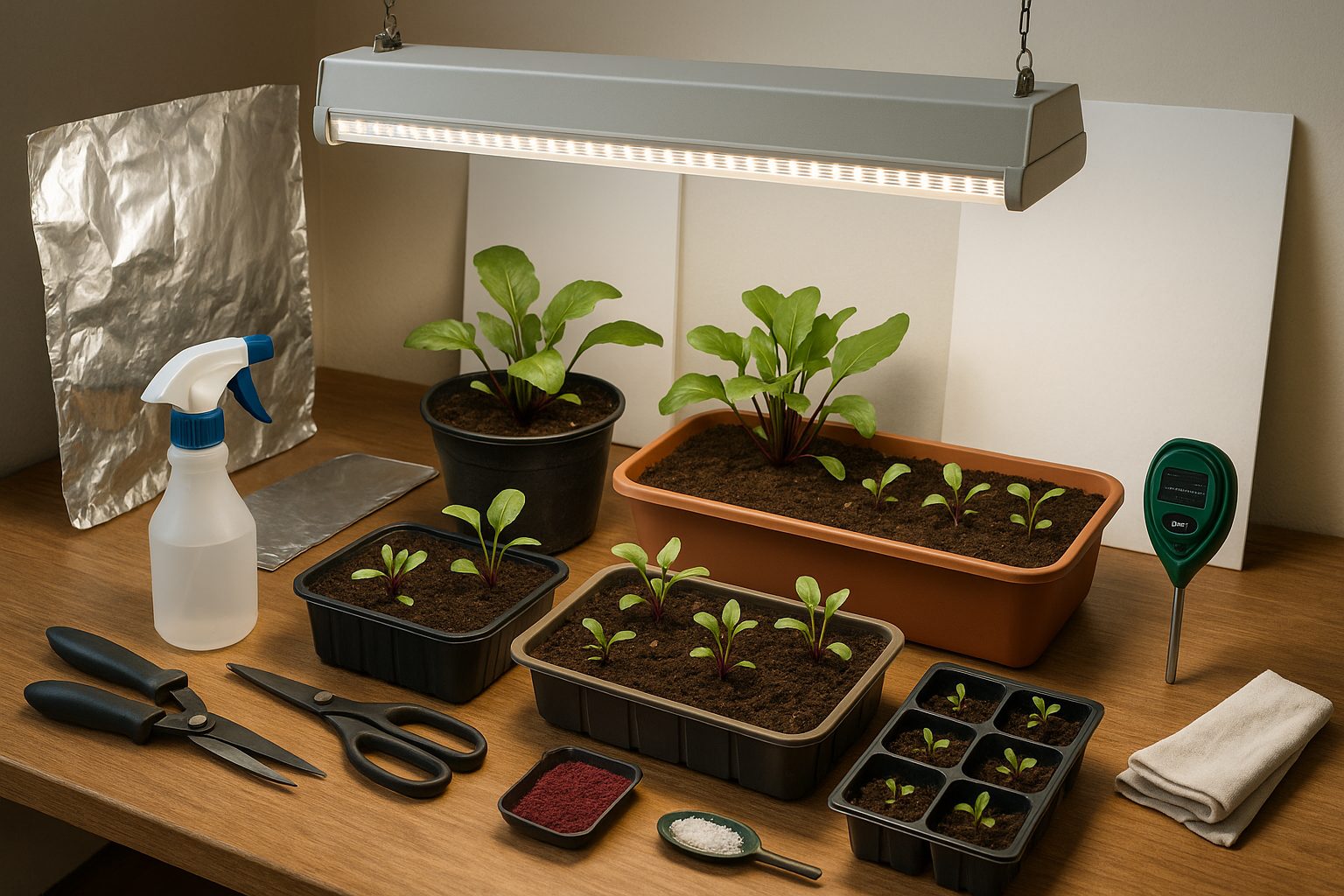
Creating the perfect lighting setup for your indoor beet garden is key to healthy, vibrant growth. Beets thrive on at least 12–16 hours of bright, indirect light daily, so positioning your grow lights directly above the plants is essential. Ideally, place the lights 8–12 inches above the tops of your beet leaves to ensure even coverage without burning.
Using full-spectrum LED grow lights is a great way to mimic natural sunlight, but be sure to adjust the height as your plants grow to avoid light stress, such as curled leaves or faded colors. If you want to tap into natural sunlight, select a south-facing window that gets plenty of midday sun, and enhance that light by placing reflective surfaces—like aluminum foil or white poster boards—around your plants to bounce extra light onto the leaves.
Don’t forget to rotate your containers every few days so all sides receive equal exposure, which encourages upright, healthy growth.
One common mistake is placing lights too close, which can scorch leaves, or too far away, leading to leggy, weak plants. Also, avoid sunlight filtered through heavy curtains or shaded windows, as this can deprive your beets of the intensity they need. Monitor your beet plants daily: if leaves turn pale or stems seem to stretch, it’s a sign to reassess your light setup.
With the right balance of artificial and natural light, your indoor beet garden can thrive year-round, producing sweet, tender roots and lush greens.
Monitoring Your Beets’ Response to Light
Paying close attention to how your beets respond to light can make all the difference in their health and yield. If your beet seedlings start looking tall and spindly—often called “leggy”—that’s a classic sign they’re reaching for more light and not getting enough. You might also notice pale or yellow leaves, or a significant slowdown in their growth.
On the flip side, too much direct, intense light can scorch the leaves, causing crispy edges or bleached, whitish spots.
Troubleshooting Light Issues
First, check the distance between your light source and the plants; indoor beets do best when grow lights are about 6–12 inches above them. If you’re using natural sunlight and your beets look leggy, try moving containers to a sunnier window or supplementing with grow lights. For outdoor gardens, consider using shade cloths if the midday sun is too harsh.
Adjusting Light as Beets Mature
As your beets mature, their light needs change. Seedlings thrive with 14–16 hours of light daily, but as the roots develop, you can gradually decrease this to about 12 hours. Adjust your timer accordingly, and always watch for signals from your plants.
With a little observation and timely tweaks, you can keep your beets happy and productive at every stage.
Beyond Light: Other Key Factors for Indoor Beet Success
While light is crucial for growing healthy beets indoors, it’s just one piece of the puzzle. Start by choosing containers with good drainage—shallow, wide pots work best since beets don’t develop long roots. Use high-quality, loose potting soil enriched with organic matter, as compact soil can stunt beet growth.
Water consistently but avoid overwatering; let the top inch of soil dry out before watering again, as beets dislike soggy roots. Temperature matters too—aim to keep your growing area between 60°F and 75°F, since extreme heat or cold can slow growth or cause bolting.
Humidity should be moderate; too much humidity encourages disease, while dry air can stress your plants. A small fan or occasional misting may help maintain the right balance.
Remember, bright light needs to be balanced with these factors—getting the soil, temperature, and watering just right will help your beets thrive and taste their best.
While beets grown for roots rarely flower indoors, if you’re hoping to save seeds and your plants bolt, gentle hand pollination with a small brush can help mimic what bees do outside.
Focusing on these all-around care tips ensures healthier, more productive indoor beet crops.
Harvesting Indoor Beets and Maximizing Yield
Knowing when to harvest your indoor beets largely depends on observing their size and leaf color, both of which are influenced by your lighting setup. Generally, beets are ready when their shoulders peek out above the soil and reach about 1.5 to 3 inches in diameter. Providing 12-16 hours of bright, consistent light daily can speed up growth and intensify their vibrant leaf colors, signaling they’re ready to harvest.
If your beets’ leaves look pale or the bulbs aren’t swelling, try adjusting the height or duration of your LED lamp. For a steady supply, practice successive plantings by sowing new seeds every two to three weeks in separate containers, ensuring each batch receives equal lighting intensity to avoid uneven development.
After harvesting, trim off the leafy tops—which are also edible and great for sautés or salads—leaving about an inch of stem to reduce bleeding. Store beetroots in a perforated bag in the fridge; they’ll stay fresh for several weeks.
Enjoy your beets roasted, boiled, or spiralized for salads. Just remember, their sweet, earthy flavor shines brightest when used within days of picking. This way, you can enjoy both beautiful greens and tender roots year-round from your indoor garden.
Conclusion & Quick Tips
Good lighting is essential for healthy indoor beet growth, as it drives photosynthesis and helps your plants thrive. To get the best results, use full-spectrum LED grow lights and keep them about 12–18 inches above the beet plants.
Aim for 12–16 hours of light per day, and don’t forget to rotate your pots to ensure even growth. If you notice leggy or pale seedlings, try increasing the light intensity.
Every growing space is different, so experiment with placement and duration to see what works best for you. Have questions or tips of your own? Share them in the comments below!