
Introduction
If you’re aiming for a bountiful harvest, a smart root crop layout is the key to success—especially when it comes to favorites like beets, carrots, and radishes. Root vegetables have become increasingly popular in home gardening because they’re versatile in the kitchen and surprisingly easy to grow, even if you’re just starting out.
Many beginner gardeners are drawn to crops like beets thanks to their low-maintenance nature, forgiving growth habits, and dependable yields. In this guide, you’ll discover straightforward strategies to plan your root crop layout for optimal growth, healthier soil, and easier harvesting.
We’ll cover practical design tips, from soil preparation to spacing, and spotlight the top easy-to-grow root vegetables that thrive in various conditions. Whether you have a small raised bed or a larger plot, you’ll find real-world advice to kickstart your garden and set yourself up for a season of vibrant, delicious crops.
Why Grow Root Vegetables?

Root vegetables are a smart choice for both beginner and seasoned gardeners thanks to their impressive nutritional profile and incredible versatility in the kitchen. Packed with fiber, vitamins, and essential minerals like potassium and vitamin C, carrots, beets, turnips, and radishes add flavor and nutrition to everything from hearty stews to fresh salads.
Many root veggies, such as potatoes and sweet potatoes, can be mashed, roasted, or even turned into chips for a satisfying, healthy snack. Another huge benefit is their long shelf life—when properly stored in a cool, dark place, roots like carrots, parsnips, and beets can last for months, easily outlasting more delicate veggies like lettuce or tomatoes.
Root crops are also forgiving when it comes to soil type and climate. Radishes mature quickly even in less-than-perfect soils, while carrots and potatoes thrive in well-drained beds and adapt well to varying weather conditions. Even if you don’t have a large backyard, most root vegetables grow happily in deep containers, making them perfect for patios or balconies.
Just sow seeds in a sunny spot, water regularly, and soon you’ll be harvesting hearty, home-grown produce—no big garden necessary. Their reliability, hardiness, and versatility make root vegetables a practical and rewarding addition to any garden, big or small.
Top Easiest Root Vegetables to Grow
If you’re new to gardening or want a low-maintenance start, root vegetables are a fantastic choice thanks to their resilience and versatility.
Radishes are perhaps the easiest; they sprout quickly, often ready to harvest in just 3–4 weeks, and tolerate various soils—just keep them well-watered and thin the seedlings to avoid overcrowding.
Carrots are another favorite, thriving in loose, sandy soil and requiring little more than consistent moisture; sow seeds thinly and avoid heavy clay to prevent stunted roots.
Beets offer dual rewards: both roots and greens are edible, and they handle cooler temperatures and less-than-perfect soil—just sow seeds directly and keep rows weed-free for best results.
Turnips practically take care of themselves, growing rapidly in both spring and fall—choose a spot with plenty of sun, and harvest when young for tender roots.
Potatoes are famously easy and productive; simply plant chunks of seed potato in rich soil, hill up the earth as they grow, and water deeply.
Onions can be planted as sets (tiny bulbs), which are highly forgiving and less prone to pests—space them apart so bulbs have room to swell.
Parsnips are patient growers but reliable, preferring deep, well-dug soil but tolerating poor conditions; soak seeds overnight before sowing to speed up germination.
For every root veggie, start with quality seeds, avoid waterlogging, and mulch to retain soil moisture—these simple steps will feed your table for months with minimal fuss.
Getting Started: Site, Soil, and Sunlight Requirements
Choosing the right spot for your garden is crucial—most vegetables and flowers thrive in loose, well-draining soil rich in organic matter. Good soil texture allows roots to spread and ensures water doesn’t pool, helping plants stay healthy and robust.
Test your soil by grabbing a handful; if it crumbles rather than clumps, you’re in good shape. Heavy clay or sandy soils can be improved by mixing in compost or well-rotted manure to boost nutrients and moisture retention.
When it comes to sunlight, aim for a location that receives at least six to eight hours of direct sun each day, as most crops like tomatoes, peppers, and corn demand full sun for the best yields. Leafy greens and root vegetables can tolerate partial shade, making them suitable for spots that get morning sunshine or dappled light.
A quick soil fix is to lay down a two-to-three-inch layer of compost and gently fork it into the top few inches—this not only feeds the soil but also improves structure and drainage.
Avoid common mistakes like planting in low spots where water gathers, or next to large trees that compete for space and nutrients. Also, steer clear of compacted soil, as tight, airless ground stunts plant growth and leads to disappointing results.
By starting with the right site and prepping your soil, you’ll set your garden up for a healthy, productive season.
Planting and Care Tips for Root Vegetables
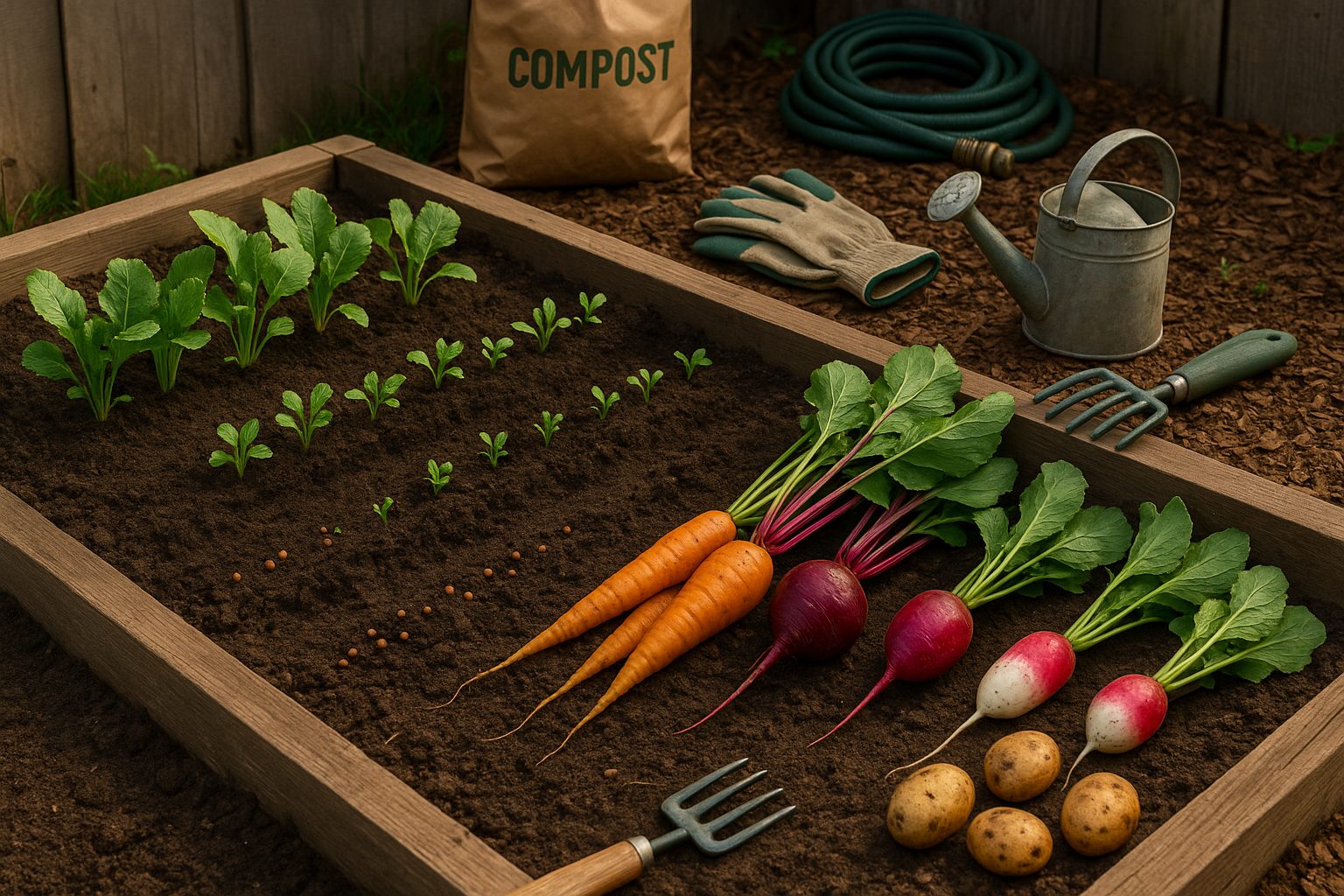
Growing robust root vegetables like carrots, beets, and radishes starts with direct sowing seeds straight into well-prepared garden soil. Unlike some crops, root vegetables prefer not to be transplanted; their delicate roots develop best when undisturbed. Before planting, loosen the soil to at least 8–12 inches deep and mix in compost to encourage easy root growth.
Space your seeds according to the packet instructions—typically, carrots and radishes need about 1–2 inches between seeds, while beets do best with 3–4 inches. Once the seedlings emerge, thinning is key to prevent overcrowding, which can lead to stunted or misshapen harvests. Gently pull extra seedlings early, leaving only the healthiest ones with enough space to expand; for example, thinning carrots to an inch apart greatly improves their size and shape.
Consistent moisture is essential throughout the growing season, so aim to keep soil evenly damp but never soggy. Mulching helps soil retain water and keeps roots cool, but always avoid overwatering, which can cause roots to rot. Water at the base of the plants and check soil moisture before watering again.
Root vegetables can attract pests like carrot rust flies and wireworms, so try natural pest control methods such as row covers, crop rotation, and interplanting with aromatic herbs like dill or chives that deter insects.
By following these straightforward planting and care tips, you’ll set the foundation for a healthy, delicious root vegetable harvest.
Harvesting and Storing Your Root Vegetables
Knowing when to harvest your root vegetables is key to getting the best texture and flavor from your crop. Look for clear signs of maturity: carrots and parsnips often show shoulders poking out of the soil, beets and radishes typically reach a size similar to what you see in stores, and potatoes are ready when their foliage yellows and dies back.
To avoid damaging the roots, use a garden fork or shovel to gently loosen the soil around the plants, being careful to keep your tool several inches away from the root itself. Once the soil is loose, lift the vegetables by their tops or gently pull them out by hand.
After harvesting, shake off excess soil but don’t wash them yet, as washing can encourage rot.
Storing Your Root Vegetables
For short-term storage, place root veggies in a cool, dark, and well-ventilated area—your kitchen pantry often works for a week or two.
For longer storage, keep them in a crate or box filled with sand or sawdust, and store them in a root cellar, basement, or refrigerator. Make sure to check your veggies every few weeks and remove any that show signs of spoilage to keep the rest fresh throughout the winter.
Conclusion & Encouragement
Growing root vegetables is surprisingly simple, making it perfect for both beginners and seasoned gardeners. These crops are hardy, require little fuss, and reward you with fresh, nutritious produce right from your backyard. Experimenting with different varieties—like carrots, beets, or radishes—can add unique flavors and vibrant colors to your meals.
Even a small patch or containers can yield impressive results, so don’t hesitate to start your own root vegetable garden. There’s nothing more satisfying than pulling up your own homegrown veggies and enjoying your harvest—it’s a rewarding process you’ll look forward to every season!